Content
What Is a Cobot? 2025 Guide to Collaborative Robots
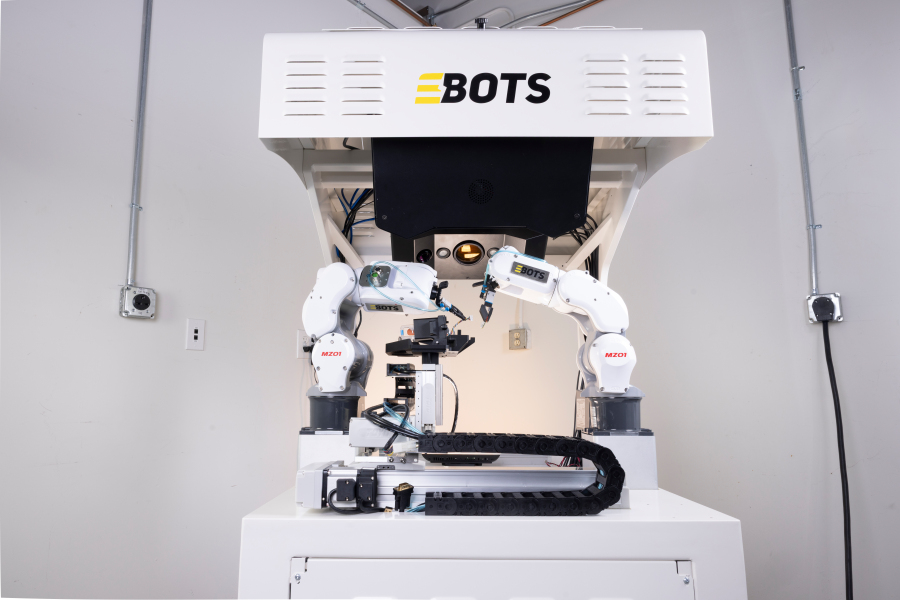
Ever imagined a robot working safely alongside you, not locked away in a cage? That’s the reality of a collaborative robot, or cobot. These aren’t the giant, intimidating machines of old assembly lines. Instead, a cobot is designed to be a true robotic coworker, helping human teams become more productive, precise, and protected from strenuous tasks.
Unlike traditional industrial robots that are physically fenced off for safety, a cobot has built in safety features like sensors and force limited joints. This allows for direct human robot interaction. They are generally smaller, more flexible, and easier to use, making them one of the fastest growing segments in automation today.
The Story of the Cobot: From Lab to Factory Floor
The idea of a cobot began in the mid 1990s. In 1996, professors at Northwestern University invented the first collaborative robot as part of a project with General Motors to make assembly lines safer. These early versions were intelligent assist devices, helping workers guide heavy parts with robotic strength, but they only moved when a human applied force, making them inherently safe.
By the 2000s, the concept took off commercially. In 2008, the Danish company Universal Robots launched the UR5, one of the first cobot arms to be widely adopted. Other innovators followed, with Rethink Robotics introducing Baxter in 2012 and ABB launching YuMi in 2015, both designed specifically for close collaboration with people.
Today, the cobot has moved from a novelty to a mainstream tool. In 2023, collaborative robots accounted for about 10.5% of all industrial robots installed worldwide, a huge leap for a technology that’s only a few decades old.
How Cobots and Humans Work Together
Not all human robot teamwork is the same. Engineers classify the interaction into several levels, showing how closely people and robots can work. Think of it as a spectrum from total separation to true partnership.
Levels of Human Robot Collaboration
One common model outlines six stages of collaboration:
Stage 1 (No Shared Space): The robot works alone behind a permanent safety fence. This is traditional automation with zero collaboration.
Stage 2 (Occasional Collaboration): The robot and human share a space, but not at the same time. When a person enters, sensors trigger a safety stop, pausing the robot until the person leaves.
Stage 3 (Buffered Collaboration): The robot automatically slows down when a person gets near and only stops if they get too close. This allows for more frequent sharing of the workspace.
Stage 4 (Side by Side Work): The operator and a power and force limited cobot work next to each other on separate tasks. Unintended contact is possible but designed to be harmless.
Stage 5 (Cooperative Work): The human and cobot work on the same part at the same time. For example, a person might hold a component while the cobot tightens the screws.
Stage 6 (Autonomous Collaboration): The most advanced level, where a mobile cobot moves and coordinates its actions with a human coworker in real time, working together fluidly. Learn how next generation autonomous robots enable this coordination.
Most cobot applications today operate in stages 3 through 5, creating a dynamic where the robot assists the human, taking on the heavy or repetitive parts of the job.
The Rules of Collaboration: Cobot Safety and Standards
To ensure a cobot is genuinely safe, its design and implementation are guided by strict international standards. The foundational standards are ISO 10218-1 and 10218-2, which cover general safety for industrial robots.
More specifically, ISO/TS 15066 provides detailed guidelines just for collaborative robots. Published in 2016, this document was a game changer. It defines the four modes of collaborative operation and, crucially, establishes data backed limits on the force and pressure a robot can exert on different parts of the human body. The core principle is simple: any contact between a cobot and a person must not cause pain or injury.
These standards define four main types of collaborative operation:
Safety Rated Monitored Stop: The robot stops when a human enters the workspace.
Hand Guiding: The operator manually leads the robot by hand.
Speed and Separation Monitoring: The robot slows down as a person gets closer.
Power and Force Limiting: The robot is inherently designed to limit its force upon contact.
The Importance of a Risk Assessment
Before any cobot can be put to work, it must undergo a thorough risk assessment. This is a mandatory process where every potential hazard, from collision points to sharp tools, is identified, analyzed, and mitigated. Integrators use the ISO/TS 15066 guidelines to ensure that any potential impact from the cobot stays below the established pain onset thresholds. The final assessment document proves that the collaborative workspace is as safe as intended before people and robots start working together.
Built In Cobot Safety Systems
Collaborative robots are packed with safety systems:
Physical Design: They have smooth, rounded surfaces with no pinch points to prevent injury. Some even have soft, cushioned exteriors.
Sensors and Software: Advanced sensors in the joints detect any unexpected force. If a cobot bumps into something, its control system stops its motion in milliseconds.
Speed Monitoring: A cobot can use vision systems or scanners to detect when a person is near and automatically reduce its speed.
Failsafes: Every cobot has emergency stop buttons and redundant processors that constantly check for faults in its safety logic.
Unpacking the Benefits of Using a Cobot
Companies are adopting cobots because they offer powerful advantages in productivity, quality, and employee satisfaction.
First, a cobot can handle repetitive and strenuous jobs 24/7 without tiring, leading to higher throughput and incredibly consistent results. This also improves ergonomics and reduces workplace injuries by freeing humans from physically demanding tasks.
Second, they boost quality and precision. A cobot performs its job with the same accuracy every single time, which dramatically cuts down on error rates in tasks like assembly or inspection. This improved consistency means more products are made correctly the first time.
The Power of Flexible Automation
Perhaps the biggest benefit is flexibility. Flexible automation is a system that can quickly adapt to produce different products with minimal downtime. Unlike fixed machinery, a cobot is a key enabler of this agility. It can be reprogrammed for a new task in a matter of minutes or hours, not weeks. This is a massive advantage for companies that deal with frequent product changes or customized orders. The market for collaborative robots is projected to hit nearly $5 billion by 2030, driven largely by this need for adaptable, easy to repurpose automation.
For businesses facing labor shortages and high turnover (which can be around 40% for some manual roles), a cobot helps stabilize production by taking on the most monotonous work, especially for manufacturers focused on transforming legacy operations. This allows employees to move into more engaging roles like supervision and quality control. At Ebots, we’ve seen firsthand how AI driven dual arm cobots can achieve over 99% first pass yield on complex assembly lines, freeing up skilled workers for higher value tasks. This creates a win win: the company gets better output, and employees get safer, more interesting jobs.
Interested in bringing these benefits to your facility? Visit Ebots to see how collaborative robotic solutions can transform your production.
Under the Hood: Cobot Components and Design
A cobot is a sophisticated system made of several key parts working in harmony.
Robot Arm and Joints: This is the main manipulator, typically with 6 or 7 axes for maximum flexibility. The arm is lightweight, and its joints contain high precision motors, gearboxes, and crucial torque sensors that allow it to “feel” its environment and react to contact.
End Effector: This is the tool at the end of the arm, like a gripper, screwdriver, or camera. The end effector is what defines the cobot’s job, and it can usually be swapped out quickly for different tasks.
Sensors: Beyond the force sensors in its joints, a cobot uses vision sensors (cameras) to see and locate parts, and proximity sensors to detect nearby objects or people. These sensors give the cobot awareness of its surroundings.
Controller: The controller is the cobot’s brain. It’s an industrial computer that runs the motion planning algorithms, processes sensor data, and ensures all safety rules are followed in real time.
User Interface: This is typically a touchscreen teach pendant. Instead of complex code, users interact with a graphical interface, making it easy to program tasks even without a background in robotics.
Bringing a Cobot to Life: Programming and AI
One of the best features of a cobot is its ease of use. You don’t need to be a coding expert to program one.
Most cobots are programmed in one of two ways:
Graphical Interface: Using a simple touchscreen tablet (the teach pendant), operators can build a sequence of actions by dragging and dropping commands.
Hand Guiding: An even more intuitive method where the operator physically grabs the robot arm and moves it through the desired motions. The cobot records these movements and can then repeat them perfectly.
This accessibility means a cobot can often be deployed in days, not months.
The Rise of AI Integration
Artificial intelligence is making the modern cobot smarter and more capable. AI, especially machine learning and computer vision, allows a cobot to handle tasks that were once too complex for automation.
Advanced Perception: With AI powered vision, a cobot can identify and handle parts even if they are randomly oriented in a bin. It can also detect subtle defects for quality control.
Adaptive Behavior: Instead of just following a rigid path, an AI enabled cobot can learn and adapt. For example, it can learn the right amount of force needed to insert a delicate component by practicing, much like a human would.
The combination of simple programming and powerful AI means a cobot can be set up quickly to handle a huge variety of complex, real world tasks. The line between a programmed machine and a learning assistant is getting blurrier every day.
Companies like Ebots are at the forefront of this evolution, developing AI driven, dual arm cobot cells that can be reconfigured for a new precision assembly task in about 15 minutes, taking automation to the next level. This level of agility empowers manufacturers to adapt instantly to design changes or shifts in demand.
Curious how flexible automation could work in your operation? Ebots offers consultative demos of cobot systems built for rapid changeovers.
Where Cobots Shine: Applications and Industries
A cobot can be used almost anywhere a flexible, safe, and precise automated solution is needed.
Common Cobot Applications
Pick and Place: Moving parts from a conveyor to a box or another machine.
Machine Tending: Loading and unloading parts from CNC machines or injection molders.
Assembly: Performing tasks like screw driving, gluing, and inserting components. In fact, assembly makes up about 26% of all cobot applications.
Packaging and Palletizing: Packing products into boxes and stacking them onto pallets.
Finishing: Sanding, polishing, or deburring parts with consistent force.
Quality Inspection: Using cameras or sensors to inspect parts for defects or measure dimensions with high precision.
Cobot Applications by Industry
Automotive: This industry was an early adopter, using cobots for assembling small components and performing quality checks. The automotive sector accounted for roughly 31% of cobot installations in 2024.
Electronics: Cobots are perfect for the delicate, high precision work of assembling smartphones, laptops, and other devices. Some advanced dual arm systems from Ebots can achieve the 20 micron precision required for assembling products like the Apple iPad.
Logistics and Warehousing: This is the fastest growing sector for cobot adoption. Cobots are used for picking, sorting, and packing orders in fulfillment centers.
General Manufacturing: Small and medium sized businesses use cobots for everything from metal fabrication to food packaging, thanks to their flexibility.
Healthcare and Medical: In labs, a cobot can automate repetitive tasks like handling test tubes. They are even being used to assist in pharmacies and to help surgeons by holding instruments.
Spotlight on Key Applications: Welding and Plastics
Beyond general tasks, cobots are transforming specific industrial processes that demand both precision and adaptability. Let’s explore two key areas: welding and the plastics industry.
Cobot Welding: A Revolution in Fabrication
Cobot welding combines the consistency of automation with the flexibility of manual work, addressing a major skills shortage in the process. A cobot equipped with a welding torch can perform a variety of tasks, including MIG, TIG, laser, and spot welding, with exceptional repeatability. This makes it ideal for businesses with high mix, low volume production runs that were previously difficult to automate.
Key benefits of cobot welding include:
Improved Weld Quality: A cobot lays a consistent bead every time, moving at a programmed speed with accuracy often within a tenth of a millimeter. This drastically reduces defects, scrap, and the need for rework.
Increased Productivity: While a human welder takes breaks, a cobot can work continuously, boosting throughput and turning one welder into a supervisor of an automated cell.
Enhanced Worker Safety: Cobots take over the repetitive, high heat, and ergonomically challenging welding tasks, protecting human welders from fumes, arc flash, and musculoskeletal strain.
Ease of Use: Unlike traditional robotic welders that require complex programming, many welding cobots can be taught by hand guiding the arm along the desired path, making setup fast and intuitive.
From automotive parts to agricultural equipment, cobot welders are enabling manufacturers to produce higher quality products faster and more cost effectively.
Cobots in the Plastics Industry: Enhancing Efficiency
The plastics and polymers industry often deals with high volume, repetitive tasks, making it a perfect fit for cobot automation. In particular, cobots excel at jobs around injection molding machines, which are central to the industry.
Common applications in plastics manufacturing include:
Machine Tending: Cobots are frequently used to load raw materials into injection molding machines and unload finished parts. This is often dull, repetitive, and injury prone work, making it ideal for automation.
Post Processing: After a part is molded, cobots can perform secondary tasks like trimming, degating (removing excess material), polishing, and applying labels or decals.
Assembly and Packaging: Cobots can assemble plastic components, perform quality control checks with vision systems, and then stack and pack finished products for shipping.
Insert Molding: They can precisely place metal or plastic inserts into a mold before injection, a task that requires high accuracy and can be challenging for human workers to do consistently.
By automating these processes, plastics manufacturers can run their machines 24/7, reduce the risk of worker injury from repetitive motions or handling hot parts, and improve overall product quality and consistency.
Your First Cobot: A Step by Step Implementation Guide
Ready to bring a collaborative robot into your workflow? Here’s a simplified path to successful integration.
Identify the Right Task: Look for repetitive, dull, or dangerous jobs that are bottlenecks in your process.
Set Clear Goals: Define what you want to achieve, whether it’s increasing output, improving quality, or enhancing worker safety.
Choose the Right Cobot: Select a model with the appropriate payload, reach, and precision for your task. Don’t forget the end effector (the tool).
Design the Workspace: Plan the physical layout. Use simulation software to model the cobot’s movements and ensure it works smoothly with your human team. For facility wide best practices, see advanced automation in manufacturing facilities.
Perform a Risk Assessment: Meticulously document and mitigate any potential hazards to ensure the application complies with safety standards.
Install and Integrate: Set up the hardware and connect the cobot to any other machines it needs to communicate with.
Program and Test: Use the intuitive interface to program the task. Run the program at a slow speed first to catch any issues before going live.
Train Your Team: Teach operators how the cobot works, its safety features, and how to interact with it confidently.
Run a Pilot: Let the cobot run in a production like environment for a few days to monitor its performance and gather feedback.
Deploy and Improve: Once the pilot is successful, roll the cobot into full production. Continue to monitor its performance and look for ways to optimize the process.
Implementing your first cobot can seem daunting, but you don’t have to do it alone. Partnering with experts can accelerate the process and ensure a successful outcome.
To get a custom plan for integrating a high precision cobot, you can contact Ebots for a consultation. Their team supports everything from planning and risk assessment to rapid implementation and training.
Frequently Asked Questions About Cobots
What is the main difference between a cobot and a traditional industrial robot?
The biggest difference is safety and collaboration. A traditional robot is powerful and fast, so it must be kept inside a safety cage to protect workers. A cobot is designed with sensors and force limits that allow it to work safely right next to people without cages.
Are cobots expensive?
While any automation is an investment, a cobot typically costs significantly less than a traditional robotic cell because it doesn’t require expensive safety fencing and complex integration. Many businesses see a return on investment in under a year due to increased productivity and quality.
How long does it take to set up a cobot?
Thanks to their user friendly programming interfaces, a simple cobot application can often be set up and running in just a few hours or days, compared to the weeks or months it can take to integrate a traditional robot.
Can a cobot completely replace a human worker?
The goal of a cobot is not to replace humans, but to augment their abilities. They take over the dull, dirty, and dangerous tasks, allowing human workers to focus on more complex problem solving, quality control, and creative tasks that require human ingenuity.
How do I know if a cobot is right for my business?
If you have tasks that are highly repetitive, require high consistency, or are ergonomically difficult for your employees, a cobot could be a great fit. They are especially valuable for businesses with high mix, low volume production due to their flexibility.