Content
Why I Bet on Automation in Precision Manufacturing
After 15 years in precision manufacturing, my friend’s organization reached a breaking point with their traditional human workforce. The constant cycle of hiring, training, and then watching newly trained talent walk out the door just months later had become unbearable. With turnover averaging 40%, they were trapped in an exhausting loop that drained their resources and killed productivity — not to mention the fact that it rendered them incapable of scaling their operation to meet new client needs.
They used to think this was just “the cost of doing business” in manufacturing. They were wrong. They eventually learned that there’s a better way.
Walking through their facility each morning, they’d see the same frustrating pattern. Some workers produced flawless products all day, while others struggled with consistency despite following identical procedures. Why? Because of the human factor. Even their best assemblers had off days, got tired, or worked at different speeds.
Then last year, one of their top performers left for a competitor. They couldn’t blame her – she wanted growth beyond repetitive assembly tasks. But her departure created a quality gap they struggled to fill. Even their production manager stated that they can’t clone their best people, which perfectly captured their fundamental limitation. Meanwhile, attracting new talent became increasingly difficult each year. The incoming workforce simply doesn’t see manual assembly as an attractive career path. They want roles involving technology and innovation, not repetitive tasks that strain their eyes and bodies.
Their leadership was initially skeptical about automation for precision work. Their early experiments with legacy robots had been disappointing. Those robots could handle simple loading tasks but failed with anything requiring real dexterity or judgment – or two hands, for that matter!
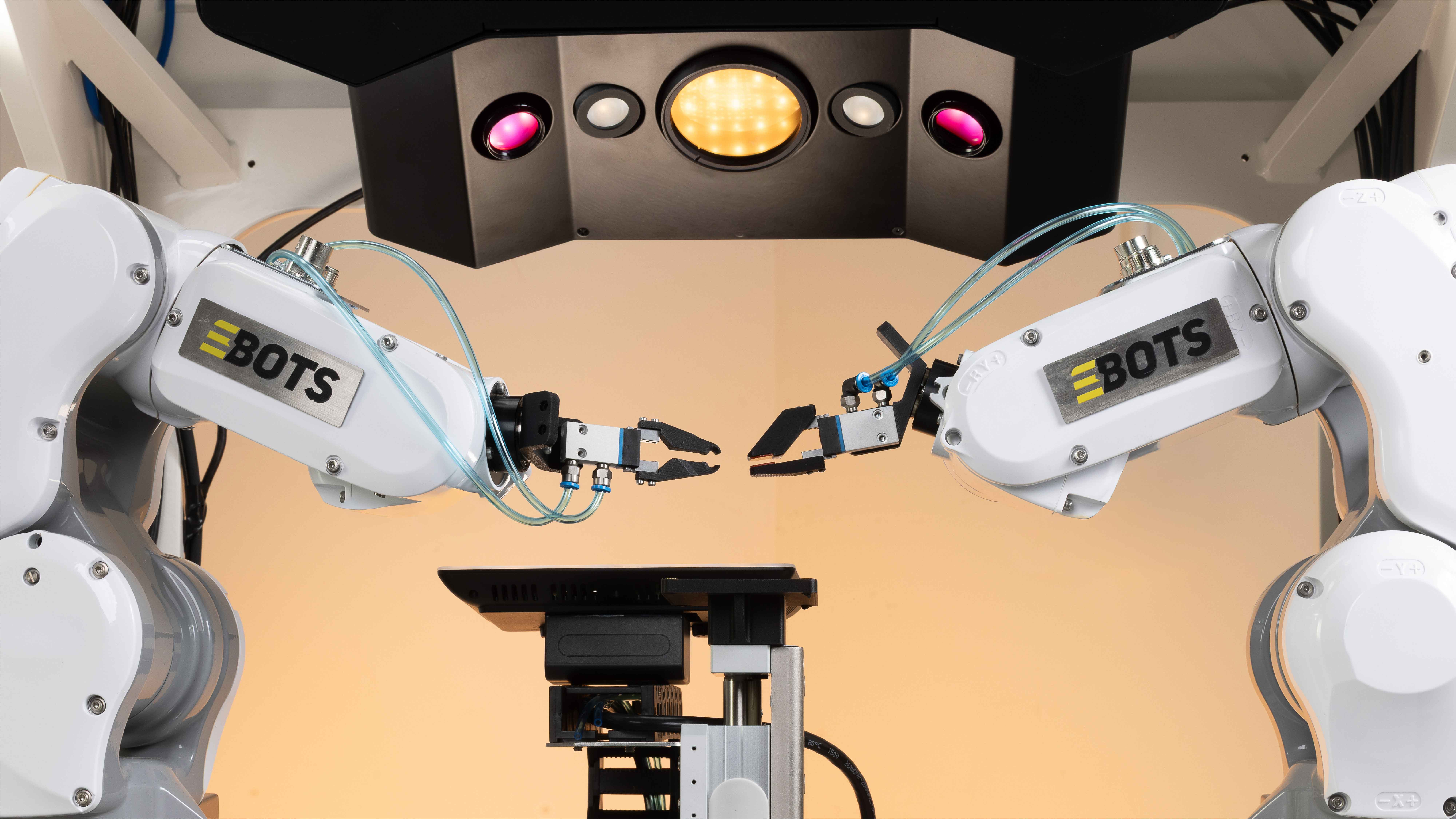
Everything changed when their executive team visited another manufacturer who had implemented next-generation adaptive robotics. These weren’t the clunky, single-purpose robots they’d seen so many times before. These systems featured dual arms moving with remarkable grace, handling complex assemblies, and even managing flexible cables – something they thought only human hands could do.
The precision was mind-blowing. Components assembled with accuracy five times finer than human hair. Quality consistency they’d only dreamed about. And at twice the speed of their human assembly lines!
The team decided it was time to implement similar technology in their facility. They started with one production line and focused on the most repetitive, precision-critical tasks. This allowed their management and their workers to learn and build confidence before expanding. They also had the foresight to involve their best assemblers in the implementation process. The workers’ knowledge of subtle manufacturing nuances proved invaluable in programming and optimizing the systems. This approach also helped address fears about job security and even raised morale, as people saw they were being elevated to more valuable roles, rather than simply being replaced.
Once everything was up and running, the transformation was revolutionary. Their production speed doubled while quality defects dropped by 85%. Their quality team used to spend hours every week handling customer complaints about inconsistent products, but now those conversations have virtually disappeared.
But the most interesting thing about the entire transformation is that they didn’t lay off a single skilled worker. Instead, they designed their assembly lines to enable the robots to work side-by-side with their human workforce. Since, like the rest of the industry, they suffered from a severe shortage of skilled workers, there was no need to. Instead, they supplemented the skilled staff they had with next-generation automation to fill in the gaps they’ve historically experienced in their human workforce. And to make things even better, they were able to redeploy some of their most highly skilled workers to more strategic projects, including programming, monitoring, and optimizing their automated systems.This not only helped the facility gain even more efficiencies, but also provided a critical career path for their best and brightest. They’re even starting to use the career path angle in their recruiting efforts, so they can attract the industry’s top talent.
The financial impact even surprised their CFO. Yes, the initial investment was significant, but they reached breakeven in just seven months. They’ve eliminated over $75,000 in annual labor costs per individual workstation, not counting the savings from reduced waste, rework, and warranty claims.
So, what’s the bottom line? It’s time to upgrade to automation. Now.
The manufacturing landscape is changing rapidly. If you’re still running an entirely human workforce for precision manufacturing, you’re already falling behind these innovators – and the gap is only going to continue to widen. Those who embrace next-generation automation will thrive with higher quality, lower costs, and greater agility. Those who don’t may find themselves unable to compete against rivals who have transformed their operations.
How will you secure your future?