Content
Industrial Cobots: Complete Guide, Costs & Use Cases (2025)

What Exactly Is an Industrial Cobot?
An industrial cobot, short for collaborative robot, is a robot designed to work safely alongside people in a shared space. Unlike traditional industrial robots that are locked away behind safety cages, cobots are packed with advanced sensors and safety features. These features, like force limited joints, allow them to slow down or stop if they come near a person, preventing injuries.
This means industrial cobots can assist human workers directly, handing them parts, holding a component steady, or taking over a strenuous task without the need for physical barriers. They are generally smaller, more flexible, and far easier to program than their conventional counterparts, making advanced automation accessible to more businesses than ever before.
A Quick Look Back: The History of Cobots
The journey of the industrial cobot began in the mid 1990s. Researchers at Northwestern University, working with General Motors, developed the first prototypes and coined the term “cobot” in 1996. These early models were passive devices designed to guide human workers, but they proved that safe human robot interaction was possible.
The market truly ignited in 2008 when the Danish company Universal Robots launched the UR5, one of the first commercially successful cobots. This sparked a new wave of automation, and major players soon followed. ABB introduced its dual arm YuMi cobot in 2015, and other robotics giants like KUKA and FANUC released their own collaborative models. In just a couple of decades, cobots evolved from a university concept into essential tools on the factory floor.
The Key Features That Define Industrial Cobots
Industrial cobots are set apart from other robots by a few core characteristics that make them ideal for collaboration.
-
Designed for Safety: This is their defining feature. Cobots are built to operate around people without cages. They use sensors and force limiting joints to detect contact and stop before causing injury. Safety standards like ISO/TS 15066 even specify that a collision should only cause minor discomfort, not actual harm.
-
Simple to Program and Use: You don’t need to be a robotics engineer to program a cobot. Many can be taught new tasks simply by guiding the robot arm by hand. This intuitive programming means a cobot can be deployed for a new job in minutes or hours, not weeks, which is perfect for manufacturers with frequent product changes.
-
Compact and Lightweight: Cobots are typically smaller than traditional robots, allowing them to be easily integrated into existing production lines without a major overhaul. Many are light enough to be mounted on tables or even moved around on carts, offering incredible flexibility. This also lowers integration costs since they don’t need bulky safety fencing.
-
Advanced Motion Planning and Collision Avoidance: Cobots use sophisticated algorithms to plan their paths and avoid obstacles in real time. Using data from sensors, they can dynamically adjust their trajectory to prevent collisions with people or unexpected objects, ensuring a fluid and safe workspace. This is a critical function that allows them to operate reliably in unpredictable human environments.
-
Smart and Aware: Modern industrial cobots use advanced sensors, like force torque sensors and 3D vision systems, to perceive their environment. This allows them to feel a collision or see an obstacle and react instantly. This sensory input, combined with artificial intelligence, enables them to handle increasingly complex tasks while maintaining safe collaboration with human coworkers.
Industrial Cobot vs. Traditional Industrial Robot: What’s the Difference?
The primary difference between an industrial cobot and a traditional industrial robot comes down to one idea: collaboration versus isolation.
Traditional robots are powerhouses of speed and strength. They are designed for maximum performance in high volume, repetitive tasks and are kept inside safety cages to protect human workers from their fast, forceful movements. Programming them is a complex job for specialists.
Cobots, on the other hand, prioritize safety and flexibility over raw speed. They are intentionally designed to be slower and less powerful so they can work in an open environment alongside people. Their ease of programming makes them ideal for high mix, low volume production, where tasks change frequently. While a traditional robot is a permanent installation, a cobot can be an adaptable tool that gets moved and repurposed as needs change.
Planning and Implementing a Cobot System
Successfully deploying a cobot involves more than just buying the hardware. Careful planning using modern tools can ensure a smooth integration and maximize return on investment.
Cobot design and simulation tools have become essential for this process. Software platforms like RoboDK or vendor specific tools like UR Studio allow engineers to build a virtual model of their work cell. In this digital environment, you can test the cobot’s reach, cycle time, and interaction with other machinery before making any physical changes to the factory floor. These simulators help identify potential issues early, optimize the layout for efficiency, and ensure the chosen cobot is right for the task, significantly reducing deployment time and costs.
Where Are Industrial Cobots Used? A Look at Key Applications
Cobots are versatile tools that excel at tasks that are repetitive, ergonomically difficult, or require a delicate touch. You can find them across numerous industries, assisting human workers and boosting productivity. Some common applications include pick and place, machine tending, packaging, assembly, and quality inspection.
Automotive Industry
The automotive industry has long been a leader in automation, and it’s a major user of industrial cobots. They are used on assembly lines for tasks like applying sealant, torquing bolts, or handling components. A key driver here is ergonomics. Cobots take over physically demanding jobs, like overhead work or repetitive screwdriving, reducing worker fatigue and the risk of musculoskeletal injuries. With efficiency and quality being critical, cobots have become vital for augmenting human skill in modern car factories.
Electronics Manufacturing
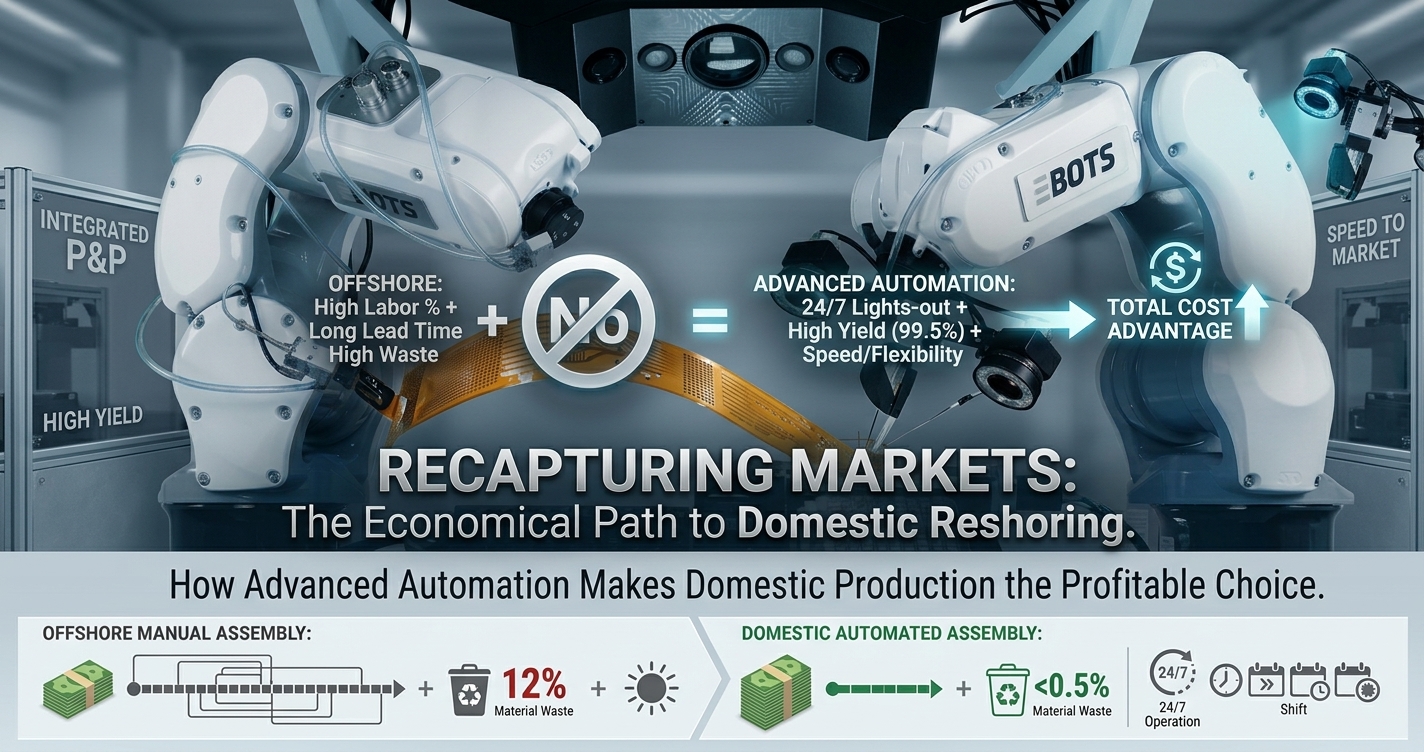
Electronics manufacturing requires incredible micron level precision and gentle handling, making it a perfect fit for cobots. They are used to assemble smartphones, computers, and other devices, where they can place tiny components, drive small screws, and dispense adhesives with perfect consistency. A prime example is the work done at Foxconn, where an advanced AI driven dual arm cobot from Ebots achieved a 99.5% first pass yield in complex assembly. This level of performance shows how cobots are helping major electronics brands meet immense quality and throughput demands.
Pharmaceutical and Life Sciences
In the highly regulated pharmaceutical industry, cobots are ideal for tasks requiring precision, consistency, and sterility. They are used for sterile handling, dispensing medications, assembling medical devices like auto injectors, and performing quality inspections. Cobots can operate in cleanroom environments, reducing the risk of human contamination while performing repetitive tasks like sorting blood samples or stacking trays with flawless accuracy. This enhances both safety and efficiency in lab automation and manufacturing.
Warehousing and Logistics
In warehouses and distribution centers, cobots are transforming how orders are fulfilled. You’ll find autonomous mobile robots (AMRs) that transport goods across the floor and robotic arms that sort packages. Amazon, for example, uses over one million robotic units across its facilities. These include mobile robots like Proteus and sorting arms like Robin and Cardinal that work alongside human employees to speed up processes and reduce physical strain. By handling the walking, lifting, and sorting, cobots help logistics companies meet the surge in ecommerce demand.
General Manufacturing
Beyond the big sectors, industrial cobots are becoming common in all types of manufacturing. In fact, nearly 55% of factories worldwide have deployed at least one cobot. Metal fabricators use them for machine tending and deburring parts. Food and beverage companies use them for hygienic packaging. They are especially valuable for small and mid sized businesses that need a flexible, affordable entry point into automation in precision manufacturing to solve labor shortages and improve consistency.
The Real World Benefits of Using Industrial Cobots
Manufacturers are adopting collaborative robots because they deliver tangible results that impact safety, quality, and the bottom line.
-
Enhanced Worker Safety: By taking over the dirty, dull, and dangerous tasks, cobots significantly reduce workplace accidents. Operations that use cobots can see up to 70% fewer injuries compared to manual or traditional automation processes. This creates a safer work environment and reduces physical strain on employees. Learn how advanced automation in manufacturing facilities improves safety and throughput.
-
Higher Quality and Productivity: A robot performs a task the same way every time, without getting tired or distracted. This consistency leads to higher product quality and less waste from errors. At the same time, cobots can work 24/7 without breaks, increasing throughput. The Foxconn example showed a single cobot station could match the output of four human workers.
-
Solving Labor Shortages: With many manufacturers facing labor shortages and high employee turnover, cobots provide a reliable solution. They can fill vacant positions for repetitive jobs, allowing companies to scale production without being limited by the labor pool. Nearly 48% of small and mid sized industrial companies are adopting cobots specifically to address these workforce gaps.
-
Unmatched Flexibility: Unlike fixed automation, cobots can be quickly repurposed for new tasks. This agility is a massive advantage for companies that need to adapt to changing customer demands or new product lines. This blend of robotic reliability and human like flexibility is what makes industrial cobots so powerful.
How Much Do Industrial Cobots Cost?
The price of an industrial cobot can vary significantly, but they are generally more affordable than traditional industrial robots. A new collaborative robot arm can range from around $10,000 for a basic model to over $150,000 for a high end system with a large payload or advanced features.
It is important to remember that this price is often just for the robot arm itself. The total cost of a complete system, including grippers, sensors, mounting, and programming, can be much higher. A good rule of thumb is that integration can often double the initial cost.
Even so, the return on investment (ROI) is often incredibly fast. Because they can be deployed quickly and boost productivity immediately, many companies find their cobot pays for itself in under a year. For a strategic view of ROI drivers when transforming legacy operations, see our analysis.
Who Are the Leading Industrial Cobot Manufacturers?
The cobot market is dynamic, with a mix of pioneering companies and established robotics giants competing for leadership.
-
Universal Robots (UR): Widely seen as the pioneer of the industry, this Danish company launched the first commercially successful cobot. UR is known for its user friendly robots and a strong ecosystem of third party tools and accessories.
-
FANUC: A powerhouse in traditional industrial robotics, FANUC offers a line of green colored collaborative robots. Its CR 35iA model boasts a 35 kg payload, the highest on the market, making it suitable for heavy duty collaborative tasks.
-
KUKA: This German company was an early innovator with its sensitive LBR iiwa cobot. KUKA’s robots are known for their precision and are often used in delicate assembly applications.
-
ABB: ABB made waves with its dual arm YuMi cobot, designed specifically for small parts assembly. The company has since expanded its lineup with the GoFa and SWIFTI cobots to cover a broader range of applications.
-
Yaskawa Motoman: This Japanese firm offers its HC (Human Collaborative) series of cobots, which are designed for durability and safe interaction in industrial environments.
-
Ebots Robotics: A leader in advanced, AI driven collaborative automation, Ebots specializes in dual arm cobots that deliver human like dexterity for complex precision assembly. Their systems are designed for ultra high yield and rapid changeovers, solving chronic labor and quality challenges on production lines. For manufacturers struggling with intricate tasks that traditional robots can’t handle, exploring a specialized solution may be the answer. You can request an automation assessment to see if it fits your needs.
What’s Next? The Latest Trends in Cobot Adoption
The world of industrial cobots is evolving quickly. Several key trends are shaping the future of collaborative automation.
-
From Niche to Mainstream: Cobots are no longer a novelty. They have become a standard automation tool, with adoption growing much faster than the overall industrial robot market. Some analysts predict cobots could account for 30% of all industrial robot sales within the next decade.
-
AI and Smarter Capabilities: Artificial intelligence and machine learning are making cobots smarter. They can now handle tasks with more variability, such as sorting mixed parts from a bin or performing complex quality inspections that once required human judgment.
-
Higher Payloads and Speeds: Manufacturers are developing cobots that can lift heavier objects and work faster while remaining safe. This is blurring the lines between collaborative and traditional robots, opening up new applications for cobots in areas like palletizing and heavy machine tending.
-
Mobile Platform Integration: Collaboration is going mobile. A mobile cobot combines a collaborative robot arm with an Autonomous Mobile Robot (AMR), allowing it to move around a facility to perform tasks at multiple locations. These systems navigate complex environments and can be used for logistics, machine tending, and quality control, offering a new level of automation flexibility. Explore how next generation autonomous robots are reshaping mobile collaboration.
-
Plug and Play Technology: The rise of cobot ecosystems, like Universal Robots’ UR+ platform, is making deployment easier than ever. These ecosystems offer certified, plug and play peripherals such as grippers, sensors, and software that integrate seamlessly. This simplifies setup, reduces integration time, and allows users to easily customize their cobot for new applications without extensive programming knowledge.
How Big is the Cobot Market?
The market for collaborative robots is experiencing explosive growth. Valued at around $2.5 billion in 2024, the global cobot market is projected to reach approximately $15 billion by 2033. For context on the evolution of precision manufacturing, see how fast changing demand is shaping adoption.
While cobots still represent a small fraction of the total number of industrial robots installed each year, their share is growing rapidly. Forecasts suggest that annual shipments could reach 125,000 units by 2029, a massive increase driven by demand from both large corporations and small businesses. Geographically, Asia is the largest market, but adoption is accelerating globally as more companies discover the benefits of flexible, collaborative automation.
Understanding Cobot Safety Standards and Collaboration Levels
Safety is the cornerstone of collaborative robotics, governed by a set of key international standards. The main standards are ISO 10218-1 and ISO 10218-2, which outline the safety requirements for industrial robots, including those designed for collaboration.
More specifically, the technical specification ISO/TS 15066 provides detailed guidance for collaborative robot applications. It defines four distinct levels of human robot collaboration, each with its own safety method:
- Safety Monitored Stop: The robot ceases all motion when a human enters the shared workspace but resumes automatically when the person leaves.
- Hand Guiding: A human operator can guide the robot’s arm by hand to teach it new paths or positions while the robot’s power is on.
- Speed and Separation Monitoring: The robot and human can work in the same space simultaneously. The system uses sensors to monitor the distance between them, slowing the robot down as a person gets closer and stopping it completely before contact.
- Power and Force Limiting: The robot is designed to limit the force it can exert, so that any potential contact with a person will not cause injury. This is the most common feature associated with modern cobots.
It is critical to understand that even if a cobot is designed to be safe, the entire application, including the tool it is holding, must undergo a thorough risk assessment. A cobot holding a sharp object is still a hazard. Proper implementation of these standards is what allows industrial cobots to work safely without cages, enabling true human robot collaboration.
Frequently Asked Questions About Industrial Cobots
1. Are industrial cobots completely safe to work around?
When installed correctly following a proper risk assessment, industrial cobots are very safe. They are designed with features like force and speed limits to prevent injury. However, the safety of the entire system depends on the task and the tool the cobot is using.
2. Can a small business afford an industrial cobot?
Yes. Cobots are one of the most affordable ways for small and medium sized businesses to get started with automation. Their lower upfront cost, combined with a fast return on investment, makes them accessible even for businesses without large capital budgets.
3. What tasks are industrial cobots best suited for?
Cobots excel at repetitive, predictable tasks that are ergonomically challenging for humans. This includes things like machine tending, pick and place, packaging, light assembly, polishing, and screwdriving.
4. How long does it take to set up and program a cobot?
One of the biggest advantages of cobots is their ease of use. Basic tasks can often be programmed in under an hour, even by operators with no prior robotics experience. This allows for rapid deployment and easy reconfiguration for new jobs.
5. Will industrial cobots replace human workers?
The goal of most cobot deployments is not to replace people, but to augment their abilities. Cobots take over the monotonous and physically straining tasks, freeing up human workers to focus on more complex, value added activities like problem solving, quality control, and process improvement. For companies like Ebots, the mission is to use robotics to enhance human potential. You can learn more about this vision and how it’s shaping the future of manufacturing.