Content
Collaborative Robots in Manufacturing: 2025 Complete Guide
As manufacturers grapple with skilled labor shortages and the need for more agile production, a new kind of automation, next generation autonomous robots, has stepped into the spotlight. Collaborative robots, or cobots, have become the fastest growing segment in industrial robotics, and for good reason. These systems are designed to work safely alongside people, offering a powerful way to boost productivity and quality, even when finding staff is a challenge.
But what exactly are collaborative robots, and how are they changing the factory floor? This guide breaks down everything you need to know, from their core components to the business benefits driving their adoption.
What is a Collaborative Robot?
A collaborative robot is a robot specifically designed to interact directly and safely with humans in a shared workspace. Unlike traditional industrial robots, which are locked away behind cages, cobots are built with features that allow people to work right next to them on the same tasks.
Think of them less as a replacement for human workers and more as a powerful helper. A cobot might handle repetitive lifting or precise positioning, while a human performs the final delicate assembly or inspection. This synergy combines the strength and endurance of a robot with the dexterity and critical thinking of a person.
The concept isn’t new. The term “cobot” was first coined in 1996 by professors at Northwestern University who were developing robotic assistants for General Motors to help workers handle heavy parts. Since then, the technology has evolved dramatically, becoming more user friendly, capable, and accessible for businesses of all sizes.
The Core Components of a Cobot
To understand what makes a cobot work, it helps to know its main parts. Every collaborative robot is a system of hardware and software working together.
Robotic Arm and Joints
The arm is the most visible part of the cobot. It is composed of a series of links connected by joints, which act like a human shoulder, elbow, and wrist. These joints allow the arm to rotate and pivot, giving it a specific range of motion. Most cobots have six or seven joints, providing the flexibility needed to reach around obstacles and perform complex movements.
End Effector (The Tool)
Attached to the end of the arm is the end effector, also known as the end of arm tooling (EOAT). This is the part of the cobot that interacts with objects. It is like the robot’s hand and can be changed to suit different tasks. Common end effectors include:
- Grippers: For picking up and moving objects.
- Welders: For automated welding applications.
- Screwdrivers: For assembly tasks.
- Sanders or Polishers: For finishing tasks.
- Cameras and Sensors: For inspection and quality control.
The choice of end effector is critical and depends entirely on the specific application.
Controller and Software (The Brain)
The controller is the brain of the cobot. It is a computer that houses the software, processes information from sensors, and tells the arm and end effector how to move. Modern cobot software is designed to be user friendly. Instead of complex coding, many systems use a simple graphical interface on a tablet or allow the operator to physically guide the arm by hand to teach it a new path. More advanced systems use AI and vision to adapt to changes in their environment automatically.
Cobot vs. Industrial Robot: What’s the Difference?
While both are forms of automation, collaborative robots and traditional industrial robots are fundamentally different in their design and application. The key distinction is their relationship with human workers.
-
Safety and Interaction: A cobot is designed for fenceless operation. It has built in safety sensors and force limiting technology that allow it to detect a person and stop or slow down, ensuring any contact is harmless. An industrial robot, however, operates at high speeds and forces, making it dangerous to humans. It must be isolated behind heavy safety fencing or light curtains to prevent accidents.
-
Flexibility and Programming: Cobots are engineered for ease of use. Many can be programmed using simple drag and drop interfaces or by physically guiding the robot’s arm through the desired motions. This means non engineers can set up and re task a cobot quickly. Industrial robots typically require specialized programming knowledge and significant integration effort. For a roadmap to agile deployments, learn how manufacturers take automation to the next level.
-
Deployment and Cost: Because they don’t need extensive safety infrastructure, collaborative robots are a lower cost deployment option. They are often smaller and can be moved between tasks, making them a great fit for small and medium sized businesses. Industrial robots have a higher upfront cost and require expensive, permanent installations.
In short, cobots trade some raw speed and power for safety, flexibility, and collaboration.
Types of Collaborative Robots
The cobot market includes several designs, each suited for different needs. They can be categorized by their payload (how much they can lift), reach (how far they can extend), and physical configuration. Some common types include:
- Single Arm Cobots: The most common type, these robots feature a single, multi jointed arm. They are versatile and used for a wide range of tasks like machine tending and pick and place operations.
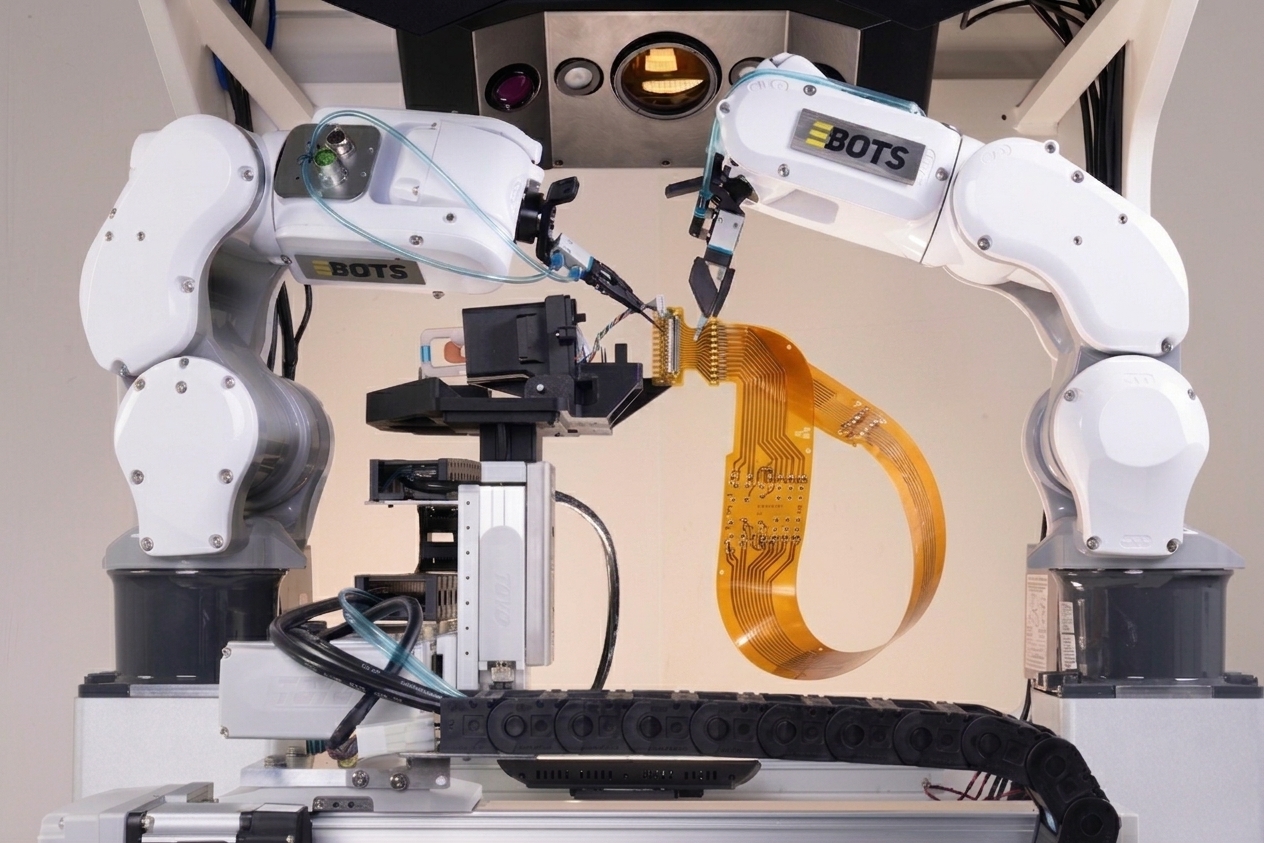
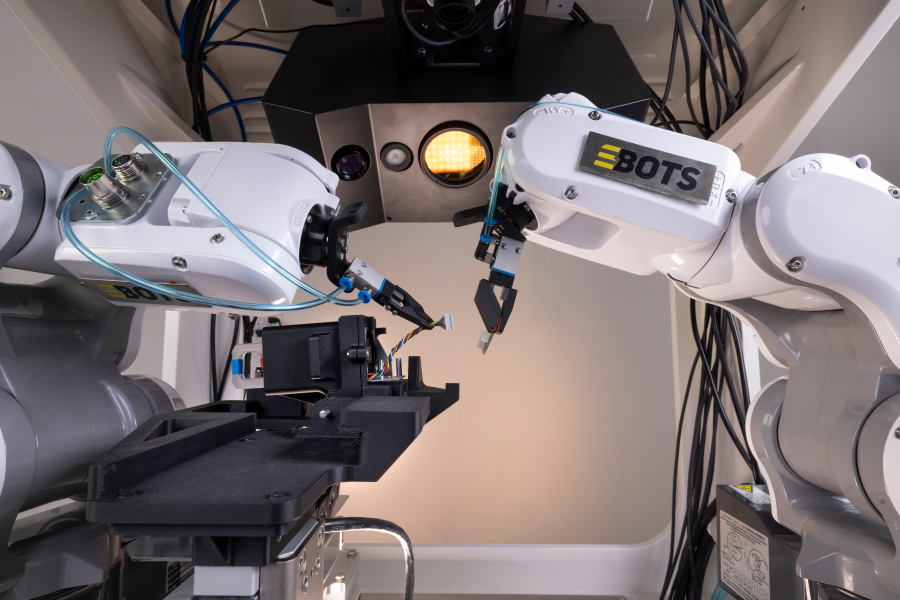
- Dual Arm Cobots: Designed to mimic the two arms of a human worker, these advanced robots can perform complex assembly tasks that require holding a part with one arm while working on it with the other.
- Mobile Cobots: These systems combine a cobot arm with an autonomous mobile robot (AMR) base. This allows the robot to move around a facility, performing tasks at multiple workstations and increasing its overall utility.
The Safety Imperative: How Cobots Work with People
Safety is the defining characteristic of collaborative robots. This is achieved not through fences, but through intelligent design and a layered approach to risk management.
Key Safety Features
Cobots rely on several built in features to ensure safe operation around people:
- Power and Force Limiting: The robot’s joints are designed to sense and limit the amount of force they can exert. If a cobot bumps into a person, its controller detects the abnormal force and immediately stops or gives way, preventing injury. The goal is to keep any impact energy below established pain threshold limits.
- Speed and Separation Monitoring: Many cobot systems use sensors like laser scanners or cameras to create a protective bubble around the robot. When a person enters this zone, the robot automatically slows down. If they get too close, it stops completely. It only resumes full speed once the person moves away.
- Hand Guiding: This feature allows an operator to literally grab the robot’s arm and guide it by hand. A safety enabling switch must be held down, ensuring the robot only moves under direct human control. This is a powerful and intuitive way to teach the robot new tasks or use it as a smart lift assist tool.
- Safe Design: Cobots are built with rounded corners, smooth surfaces, and minimal pinch points to reduce the risk of injury during contact. They also include redundant safety circuits and prominent emergency stop buttons.
Risk Assessment and Safety Standards
Even with these features, deploying any robot requires a thorough risk assessment. This is a mandatory process of identifying all potential hazards in the robot’s workspace and implementing measures to mitigate them. You have to consider not just the robot, but also the tool it’s holding and the parts it’s handling.
Two key international standards govern the safety of collaborative robots:
- ISO 10218: This is the foundational safety standard for all industrial robots. Part 1 covers the design of the robot itself, while Part 2 covers the safe integration of the robot into a workcell. It establishes the framework for safe robot systems.
- ISO/TS 15066: This technical specification provides specific guidance for collaborative robot applications. Its most important contribution is a detailed set of data on human pain thresholds for 29 different body areas. This allows engineers to design and validate that their cobot application limits contact forces to verifiably safe levels.
By following these standards and conducting a proper risk assessment, companies can confidently deploy collaborative robots in an open, fenceless environment. For templates and deeper guides, explore our resources.
Levels of Human Robot Collaboration
Not all collaborative applications are the same. The degree of interaction can range from simple coexistence to true, responsive teamwork. There are generally five levels of collaboration:
- Fenced Operation: The robot is completely isolated. This is traditional automation, not collaboration.
- Coexistence: The human and robot work in the same general area but on separate tasks, without their workspaces overlapping.
- Sequential Collaboration: The human and robot work on the same part but take turns. A person might load a part into a fixture, step away, and then the robot performs its task.
- Cooperation: The human and robot work on the same part at the same time. For example, a cobot holds a heavy component steady while a worker fastens screws.
- Responsive Collaboration: The highest level, where the robot actively senses and responds to the human’s movements in real time to work in sync on the same task.
Understanding these levels helps in designing workcells that are both efficient and safe for the required degree of human robot interaction.
The Business Case: Why Adopt Collaborative Robots?
The rapid growth in the cobot market, which was valued at around $1.6 billion in 2023 and is projected to hit nearly $12 billion by 2030, is driven by clear business advantages.
Addressing the Labor Shortage
One of the most significant drivers for cobot adoption is the persistent labor shortage in manufacturing. Companies are struggling to fill roles for repetitive and physically demanding jobs. One study projected that 2.1 million US manufacturing jobs could go unfilled by 2030 due to a skills gap. Collaborative robots directly address this by automating the tasks nobody wants, allowing companies to reassign their valuable human workers to more complex and engaging roles. This helps maintain production even when staffing is a challenge. For manufacturers facing high turnover and staffing volatility, advanced cobot systems provide a reliable, 24/7 solution to keep lines running. See how leaders are transforming legacy operations. To see how AI driven robots can solve your own workforce challenges, explore the Ebots platform.
Fast Return on Investment (ROI)
Cobots offer a remarkably fast return on investment. Because of their lower upfront cost and minimal integration expenses (no expensive fencing), they are a much more accessible form of automation. Many companies see a payback period of well under a year. Explore Ebots dual arm AI robotic cells to model ROI for your lines. One leading manufacturer reported an average ROI of just 195 days across its customer base. By reducing labor costs, increasing throughput, and improving quality, a cobot quickly pays for itself and starts generating profit.
Unmatched Flexibility
Perhaps the greatest benefit of collaborative robots is their flexibility. They are lightweight, easy to move, and simple to reprogram. This means a single cobot can be used for multiple tasks across a facility. If production needs change, you can redeploy the cobot to a new task in hours, not weeks. Some advanced systems can be reconfigured for a completely different precision assembly process in as little as 15 minutes, while maintaining micron level precision. This agility is invaluable for manufacturers with high mix and low volume production.
Applications: What Can Collaborative Robots Do?
Cobots are versatile tools used across a huge range of industries, including automotive, electronics, consumer goods, and medical devices. For sector specific examples, explore automation in precision manufacturing. They excel at tasks that are repetitive, ergonomically challenging, or require high precision.
Common Task Applications
Some of the most popular uses for collaborative robots include:
- Pick and Place: Moving parts from a conveyor to a tray or into a box.
- Machine Tending: Loading and unloading CNC machines, injection molding machines, or presses.
- Packaging and Palletizing: Packing finished goods into cases and stacking them onto pallets.
- Finishing Tasks: Sanding, polishing, or deburring parts with consistent force and motion.
- Quality Inspection: Using a camera or sensor to inspect parts for defects, ensuring 100% quality control.
- Assembly: Performing tasks like screw driving, dispensing adhesives, or inserting components with high precision.
This flexibility allows even small and medium sized businesses that couldn’t previously afford automation to improve their processes.
A Practical Guide to Cobot Implementation
Getting started with collaborative robots is more accessible than ever. Following a structured approach can ensure a smooth and successful deployment.
- Identify the Right Task: Begin by looking for tasks that are repetitive, dull, or ergonomically unsafe for human workers. Good starting points often include machine tending, packaging, or simple pick and place operations.
- Conduct a Thorough Risk Assessment: As mentioned earlier, this is a mandatory step. Analyze the entire application, including the robot, its end effector, the workpiece, and the surrounding environment to identify and mitigate any potential hazards.
- Choose the Right Cobot: Select a cobot based on the specific needs of the task, such as payload, reach, precision, and speed. Consider if a specialized system, like a dual arm robot for complex assembly, is required.
- Design the Workcell: Plan the layout where the cobot will work. Ensure there is enough space for both the robot and any human coworkers. The design should promote a safe and efficient workflow.
- Deploy and Train: Once the system is installed, provide training for the operators who will be working with the cobot. Because of their user friendly interfaces, this training is often straightforward, enabling your team to manage and even reprogram the cobot for new tasks.
The Next Generation of Collaborative Robots
The field of collaborative robotics is evolving quickly, with new technologies making them smarter and more capable than ever before.
AI and Vision Integration
Equipping cobots with artificial intelligence and advanced vision systems allows them to perceive and adapt to their environment in real time. Instead of just following a fixed path, an AI powered cobot can recognize and pick randomly oriented parts from a bin, adjust its motion to account for variations, or even perform complex quality inspections. This makes automation possible for tasks that were previously too unstructured for a robot.
Mobile Cobot Platforms
By mounting a collaborative robot arm on an autonomous mobile robot (AMR), you create a mobile cobot. This robot can navigate a factory or warehouse on its own, moving between workstations to perform different tasks. A single mobile cobot could tend several machines, deliver parts to an assembly line, and then move to the shipping department to palletize boxes, dramatically increasing its utilization and value.
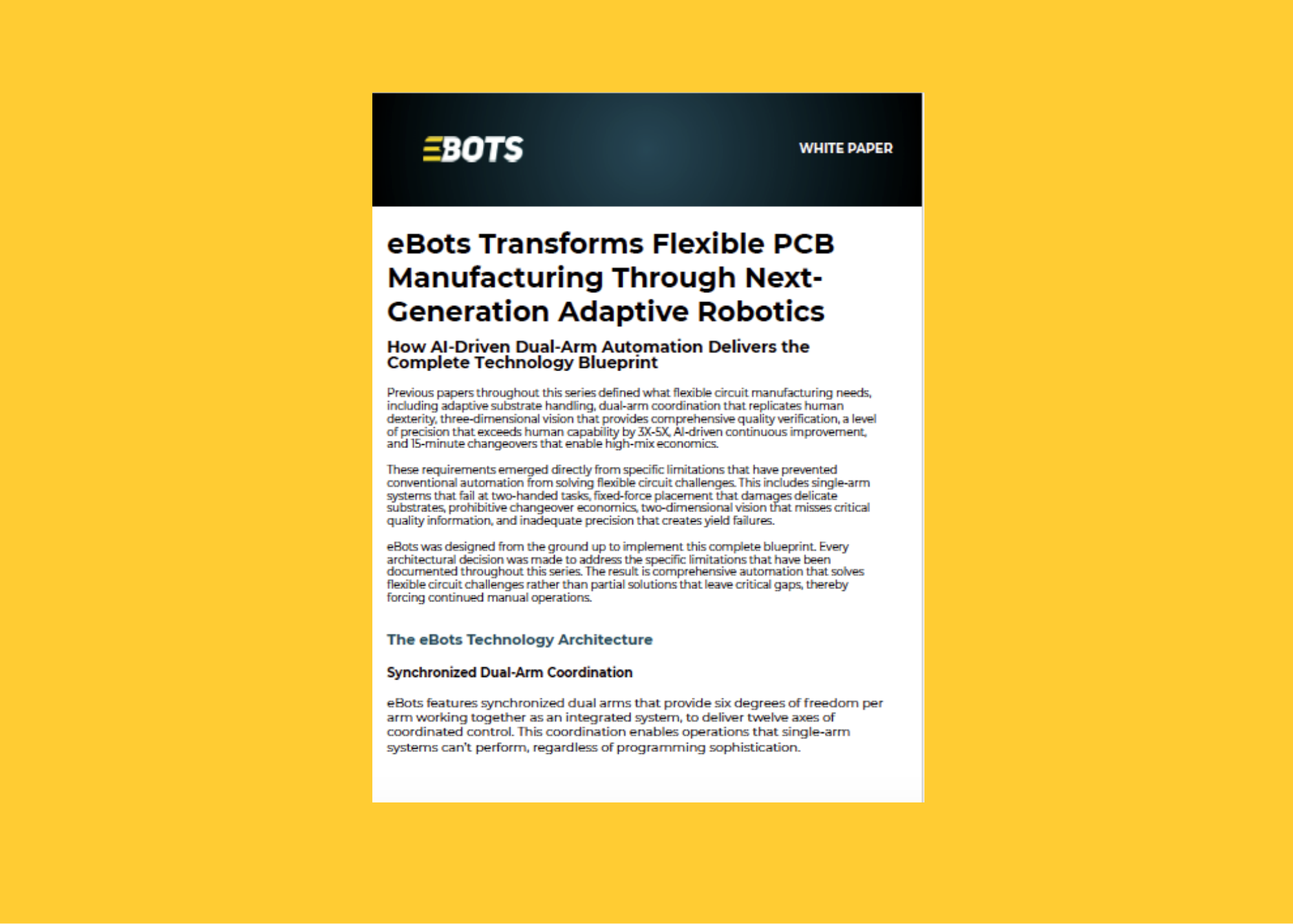
AI driven, dual arm systems represent the cutting edge of this evolution, replicating skilled human dexterity to perform intricate assembly tasks that single arm cobots can’t. Learn how Ebots delivers superhuman precision and adaptability for complex manufacturing.
Frequently Asked Questions about Collaborative Robots
1. What is the main difference between a cobot and an industrial robot?
The primary difference is safety and the ability to work alongside humans without physical barriers. Cobots are designed with force limiting sensors and other features for safe, fenceless operation, while industrial robots are powerful and must be kept inside safety cages.
2. Are collaborative robots truly safe?
Yes, when installed correctly. Cobot safety relies on their built in features (like power and force limiting) combined with a mandatory risk assessment of the entire application, including the robot’s tool and workspace. Following international safety standards like ISO 10218 is crucial.
3. How much do collaborative robots cost?
While prices vary, cobots represent a lower cost deployment option compared to traditional robots. The total cost is much lower because they do not require expensive safety fencing and integration, which can often double or triple the cost of an industrial robot cell.
4. What industries use collaborative robots the most?
Cobots are used widely across many industries, with strong adoption in electronics, automotive, general manufacturing, and logistics. Their flexibility makes them suitable for both large corporations and small and medium sized businesses.
5. Can a cobot be programmed by anyone?
Many collaborative robots are designed with user friendly interfaces, including graphical tablets and hand guiding, where you physically move the arm to teach it. While complex applications may still require an expert, basic tasks can often be programmed by operators with minimal training. Talk to our engineers about your specific use case.