Content
Taking Automation to the Next Level — a Customer’s Journey
Recently, I had the opportunity to discuss with one of our customers an “aha moment” they’d had. The manufacturing director was walking her factory floor, feeling pretty good about the automation the organization had already put in place. They had autonomous robots handling the basic stuff – loading components, doing simple assemblies, etc. – and they were definitely in a better position than they were with the fully manual process they had before.
But then she watched one of their best technicians performing an intricate cable assembly that their robots just couldn’t handle. And it hit her: they’d only solved half the problem. The organization’s production flow looked like a weird stop-and-start relay race between robots and humans. The robots would do their thing, then everything would slow down waiting for people to handle the precision work, then speed up again at the next automated station.
She said it was really frustrating because the company had invested hundreds of thousands of dollars in automation, but still had bottlenecks that required their most skilled workers to perform repetitive tasks their robots simply couldn’t manage.
While this first wave of automation definitely helped, the legacy robots were only truly capable of continuously performing a single task. Each and every product spec change required the engineering team to reprogram them. One particularly painful product changeover took almost a month to complete. And there were so many tasks the robots simply couldn’t do. Anything requiring real precision or handling reformable components like cables was entirely off the table.
Their production floor looked like islands of automation with oceans of manual work between them. The company was managing two completely different workflows – one for the machines and one for people. Scheduling was a nightmare because they had to balance robot uptime with human shift changes, breaks, and vacation time.
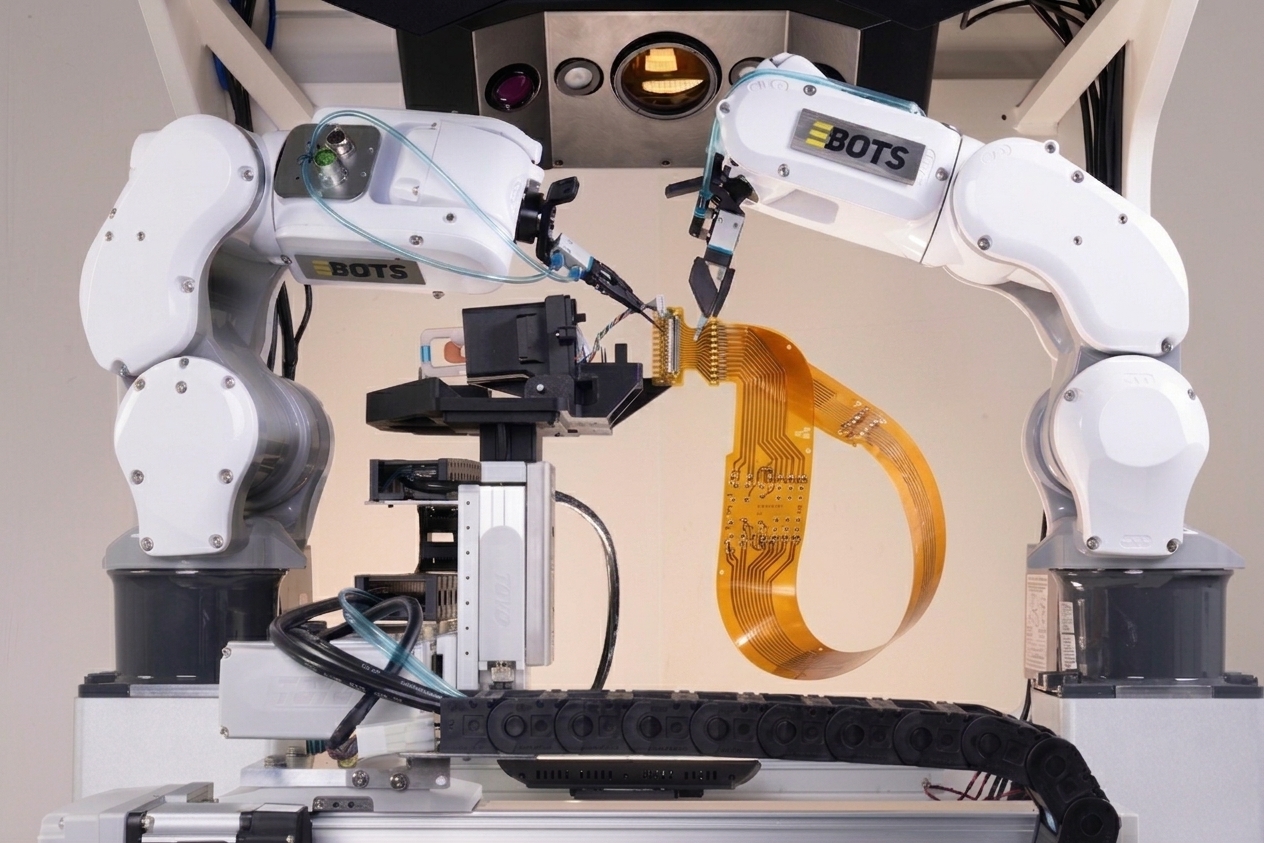
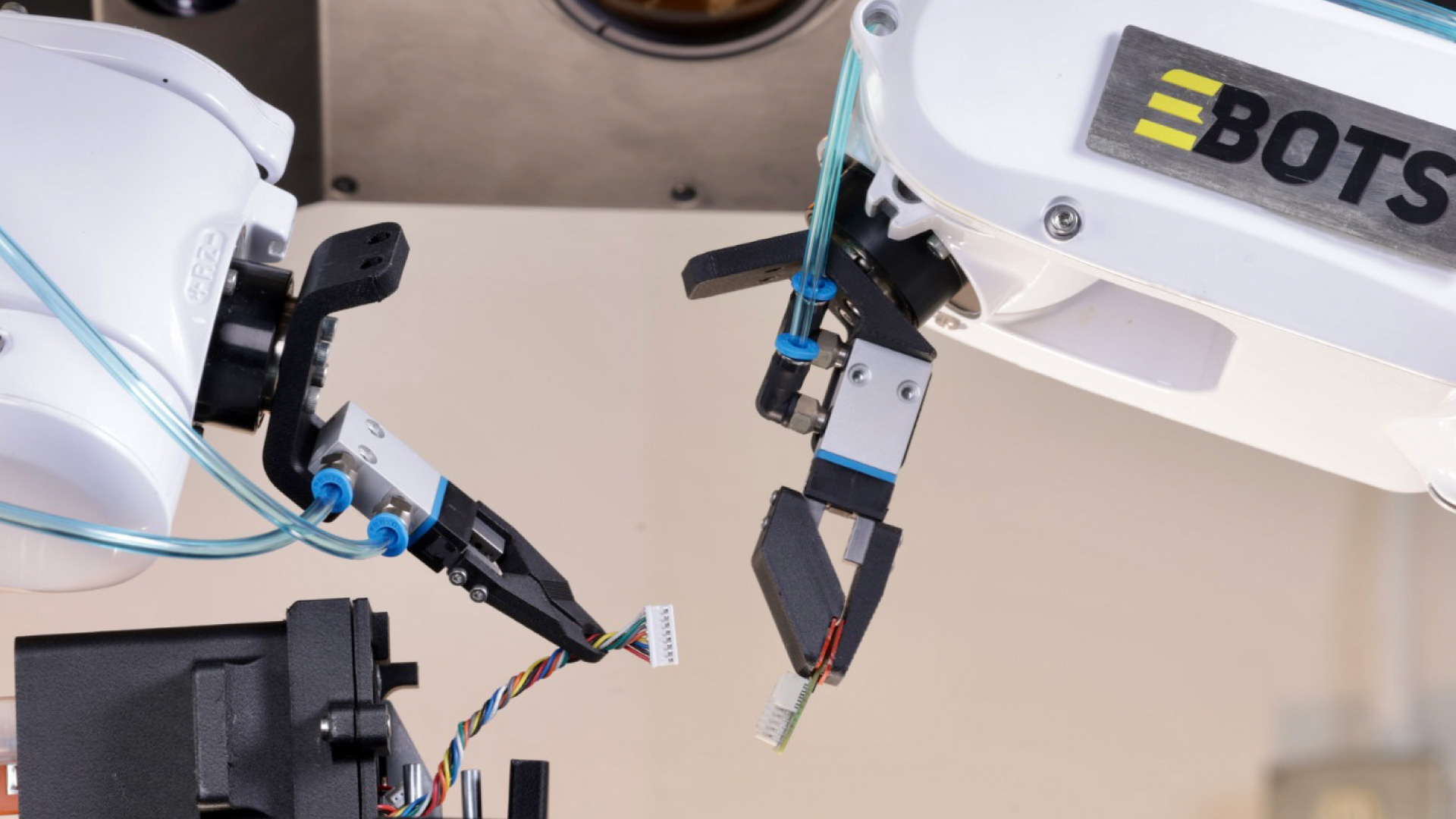
Convinced there had to be something better out there, she began to research their alternatives. Then, while at an industry conference, she met a plant manager from a different organization who couldn’t stop talking about the next-generation robots he’d installed in his facility. The way he described them sounded almost too good to be true – dual arms that moved like human hands, precision that exceeded their best workers, and the ability to be retrained for new tasks in minutes instead of weeks.
Skeptical but curious, she visited their facility. What she saw completely changed her perspective. These weren’t the rigid, limited robots her company was using. These systems moved with an almost eerie human-like grace, but with a level of precision no person could match. She watched one assemble a complex medical device with components barely visible to the naked eye – something they could only have assigned to their most skilled technicians.
This was a true game-changer. It wasn’t just what they could do, but how easily they could learn new tasks. And when her colleague’s plant introduced a new product variant, the robots were completely reprogrammed and ready to go in less than an hour.
Back at her plant, she made the case to upgrade their automation. It wasn’t an easy sell – they’d already invested heavily in their first-generation robots. But the numbers were compelling when they analyzed the remaining manual bottlenecks in their process. So, they decided to test the theory by performing a limited deployment on a process that was likely to produce the highest impact, yet with the lowest risk.
They targeted a high-precision assembly that had remained stubbornly manual despite their previous automation efforts. The first next-gen robot they installed handled a complex circuit board assembly that required placing and soldering components with microscopic precision.
The results were immediate and dramatic. Quality defects on that line dropped by 94%. Throughput increased by 40%. And the consistency was remarkable – the first unit produced was identical to the thousandth.
What surprised them most was how this upgrade transformed their entire production flow. By removing the manual bottleneck, everything ran smoother. The stop-and-start rhythm of their factory floor gave way to a continuous flow. Their overall productivity jumped by 37% – far more than just the improvement at that single workstation.
And the financial payback was even faster than they’d projected. They’d calculated breakeven at 14 months, but hit it in just 9 due to the ripple effects throughout their production process.
But the benefits went beyond numbers. One of their top automation engineers, who nearly quit a few months ago because of the lack of job growth, is now leading their robotics team, completely energized by the possibilities of the new technology. Instead of spending weeks painstakingly reprogramming robots, he’s developing new applications and process improvements.
Their workforce transformation has been remarkable, too. People who were mired in monotonous, repetitive assembly work are now managing robot cells, analyzing performance data, and finding ways to further optimize processes. Job satisfaction has gone through the roof, and their turnover rate has plummeted.
Perhaps most exciting is how this has changed what they can offer customers. They can now economically produce both high-volume standard products and small custom batches on the same lines. They’ve won business they couldn’t have touched before, including a high-precision medical component that their previous capabilities couldn’t have manufactured to specification.
Now that the organization has successfully navigated the process, their manufacturing director now shares this advice with peers in similar situations: If you’re like they were – with some automation but still relying on people for precision work – take a serious look at what’s now possible. The gap between first-generation robots and these new systems is like comparing a flip phone to a smartphone. They’re completely different technologies.
She emphasizes not thinking of this as replacing existing automation, but completing it. The company integrated their new systems with their existing robots rather than starting over, which made the economics much more attractive.
She recommends starting with a clear assessment of where your remaining manual bottlenecks are. For them, targeting high-precision assembly delivered the biggest immediate payback. Your situation might be different, but the approach should be the same – find where limited automation capabilities are forcing you to rely on scarce human skills.
Most importantly, she stresses bringing your team along on the journey. The people who know your processes best have insights that are invaluable in implementing advanced automation. And they’ll be the ones stepping into the new roles created as automation takes over more routine tasks.
At the end of our discussion, the operations director told me that she used to think they’d done pretty well with their initial automation efforts, but now she realizes that they’d just taken the first step on a much longer journey. The capabilities available today have transformed not just their production process but their entire business model. And they’re just getting started.